
One of the most common neurological eye defects in children and adults, affecting up to three percent of the population, amblyopia, or “lazy eye,” could be more complex than originally thought.
Scientists now believe the condition is the result of disrupted links between the brain and normal vision processing. Previous research that amblyopia was largely focused on visual processing in the primary visual cortex. The problem was, such work failed to account for the full range of losses suffered by those with the condition, especially motion perception.
Meanwhile new research have identified a new neurological deficit, shedding additional light on how the condition is extends far beyond the primary visual cortex.
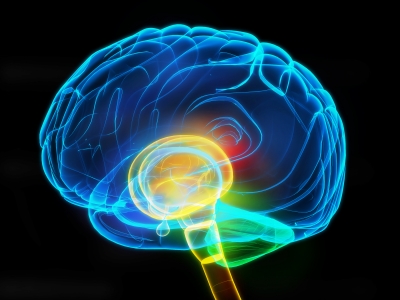
Studying a brain area called MT, which has a well-established role in processing information about moving visual objects, researchers took a closer look at the visual processing of macaque monkeys, examining those who had normal vision and those whose vision was impaired by amblyopia.
They then recorded both the monkeys’ ability to detect motion and how MT’s neurons functioned in this process.
In monkeys with normal vision, the MT neurons responded through both eyes. However, in those with amblyopia, the MT neurons showed stronger response in one eye — not affected by the disorder.
Normal visual motion perception relies on neurons that integrate information about the position of moving objects as they cross the visual image. The researchers found that this ability to integrate motion information was defective in neurons driven through the affected eye, which might explain the deficits in motion perception.